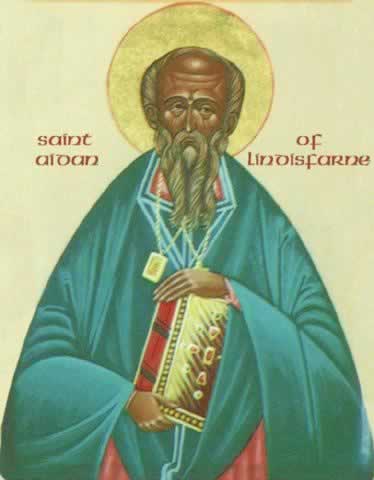
Saint Aidan
Memorial: 31st August
Died: 31 August 651 AD, Northumberland, England
Born in Ireland, St Aidan became a monk whose tutor was Saint Senan. He later became Bishop of Northumbria. When pagans attacked King Oswald's forces at Bamburgh, they attempted to burn the city walls. St Aidan prayed for help and a change in wind drove the smoke and flames back over the attackers. He also founded the monastery at Lindisfarne, which became a major centre of learning and literature during the Dark Ages. He died of natural causes on 31st August 651 at Bamburgh. Saint Cuthbert is said to have witnessed his soul rise to heaven as a shaft of light. He is buried at Lindisfarne.
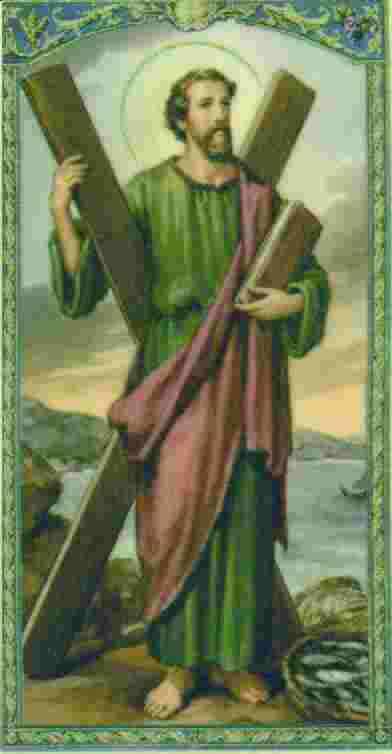
Saint Andrew the Apostle
Memorial: 30th November
Died: c. 69 AD, Achaia
St Andrew was born at Bethsaida in northern Israel and worked as a fisherman. He was a follower of John the Baptist and the first apostle called by Jesus Christ. His ministry focused on bringing others to Christ.
He travelled through Asia Minor, Greece, and possibly regions of modern Russia and Poland. Tradition holds that he was martyred on an X-shaped cross (saltire).
Several traditions explain his link to Scotland, including the relocation of relics by Saint Regulus and visions of a saltire cross seen by King Angus before victory in battle. The Declaration of Arbroath (1314) affirmed Andrew as Scotland’s patron saint, and the saltire became the national flag symbol in 1385.
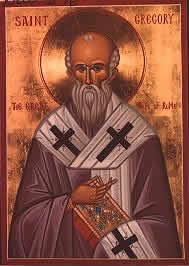
Saint Gregory the Great
Memorial: 3rd September
Died: 12 March 604 AD, Rome, Italy
St Gregory was born into a wealthy Roman family and served briefly as Prefect of Rome before giving up his wealth to become a monk. He founded several monasteries and later became Pope in 590 AD.
He sent missionaries, including Saint Augustine of Canterbury, to evangelise England and supported missions across Europe. He is associated with the development of Gregorian chant and is recognised as one of the Doctors of the Latin Church.
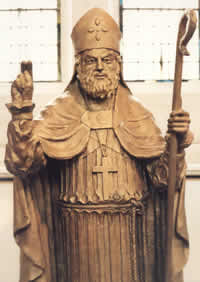
Saint Oswald
Memorial: 28th February
Died: 29 February 992, Worcester, England
St Oswald was educated under Saint Odo of Canterbury and served in several major church roles, including Bishop of Worcester and Archbishop of York. He founded monasteries at Ramsey, Westbury, Worcester, and Winchester.
He worked closely with Saints Dunstan and Æthelwold in reforming English monastic life. Known for humility and service, he is said to have died while washing the feet of the poor, as was his Lenten practice. He was buried at the Church of St Mary in Worcester.